
Loading...
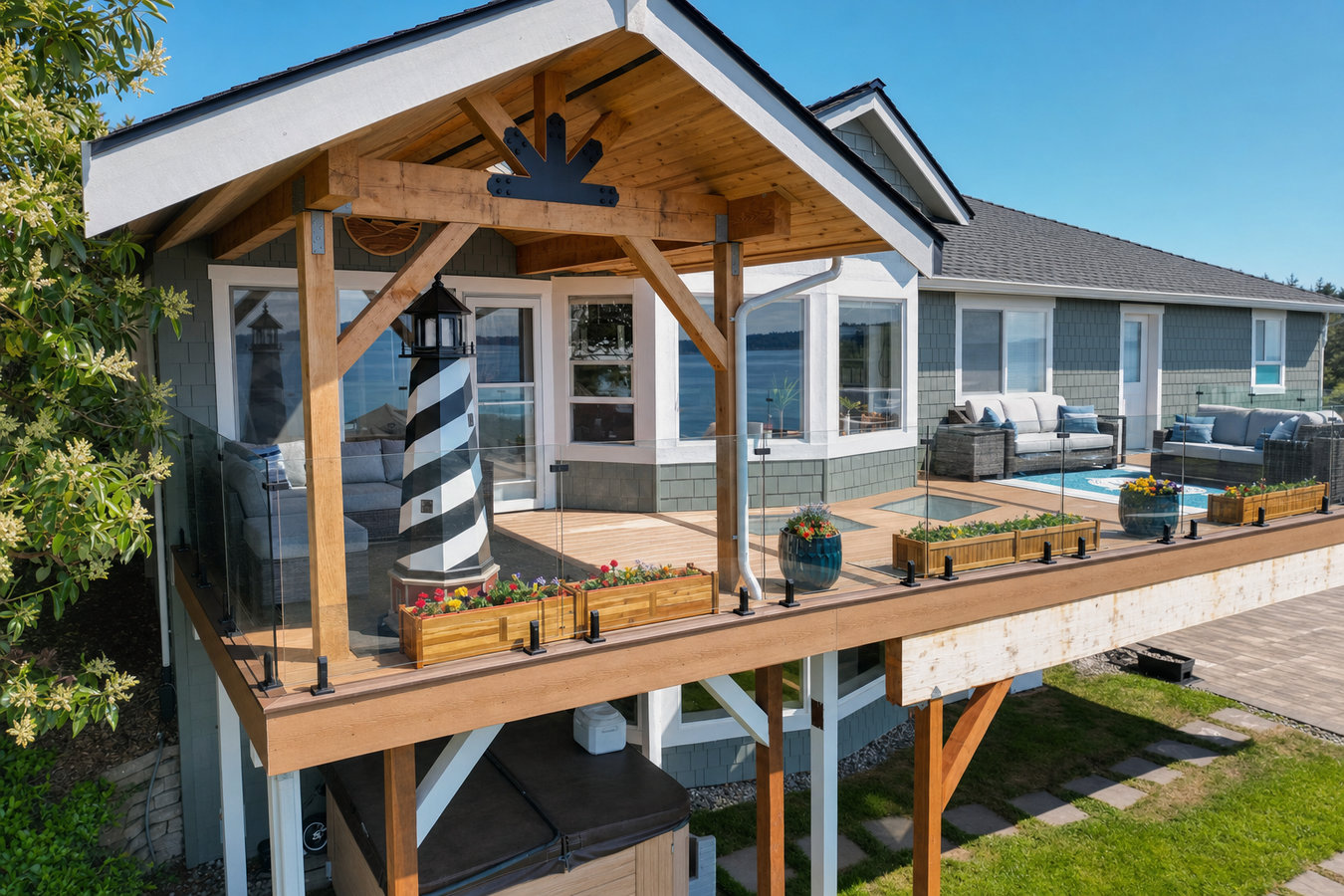
A concrete slab with no shade is unusable from June through September in Texas City. A properly built patio cover turns that empty space into an outdoor room your family will actually use - built for coastal heat, humidity, and storm season.
A concrete slab with no shade is unusable from June through September in Texas City. A properly built patio cover turns that empty space into an outdoor room your family will actually use - built for coastal heat, humidity, and storm season.
Covered decks and patio covers in Texas City are permanent roof structures built over outdoor living areas, with straightforward projects typically completed in two to five days once permits are approved. They range from a basic flat aluminum shade panel to a full gable-roofed structure with ceiling fans and lighting. The goal is the same in every case: make your outdoor space usable year-round instead of just on the handful of mild days each year.
Texas City summers push into the mid-to-upper 90s with Gulf Coast humidity that makes it feel even hotter, and an uncovered patio is essentially unusable from June through September. This is why covered patio projects here are one of the most practical investments a homeowner can make - not a luxury upgrade. If you also want to enclose the space against bugs, our screened-in porches and screened decks service can add screen panels to a covered structure so you get both shade and insect protection.
If you stay inside from June through September because your patio is too hot and bright to use, a covered structure would change how you live in your home. Texas City summers are long and intense, and an exposed slab or deck in direct Gulf Coast sun can reach surface temperatures that make it genuinely uncomfortable. A cover turns that unusable space into somewhere your family wants to spend time.
If you drag furniture inside every time a tropical system moves through, or if cushions and wood furniture show sun and moisture damage after just a season, a covered structure would protect that investment. Texas City sees significant rainfall from June through November, and an uncovered patio takes the full force of every storm.
Many Texas City homes built in the 1980s and 1990s have a basic concrete slab out back with nothing overhead. If that is your home, you already have the foundation - you just need the structure above it. Adding a cover to an existing slab is typically faster and less expensive than building from scratch.
If your existing cover is showing rust at the connections, soft or rotting wood, or a visible sag in the middle, it is time to replace it rather than patch it. Older covers in coastal Texas take a beating from salt air, humidity, and storm exposure. A sagging or corroded cover is not just an eyesore - it can become a safety issue if a storm puts stress on a structure that is already compromised.
We handle the full project from site visit and design discussion through permit, construction, and final inspection. That includes evaluating your existing slab or deck, discussing roof style options - attached covers, freestanding structures, aluminum panels, or wood-framed gable roofs - and coordinating any electrical work for ceiling fans or lighting through a licensed electrician. Every attached cover includes proper flashing where the structure meets your home's wall, which is where many poorly built covers fail first. If you want a more open overhead structure rather than a solid roof, visit our pergola installation page - we build both and can help you decide which suits your outdoor space better.
For homeowners who want full bug protection in addition to shade, a covered structure and a screened enclosure work well together. We can design and build both as a single project. We also pair covered decks with deck construction when a homeowner is starting from scratch - the deck and cover are designed together so the proportions and materials work as one finished outdoor space. Take a look at our screened-in porches and screened decks page if adding screen panels to your covered space is something you want to consider.
Suits homeowners who want a durable, low-maintenance shade structure that connects directly to the house and does not require painting or staining.
Suits homeowners who want a custom look with a solid roof, ceiling fans, and lighting - designed to match the style of their home.
Suits homeowners who want the covered space placed away from the house, with its own footings and posts, positioned where it works best in the yard.
Texas City is in a coastal high-wind zone, and every permanent structure attached to a home here must be built to handle what Gulf Coast storm seasons actually deliver. That means heavier post connections, stronger fasteners, and roofing materials rated for high-wind conditions - not standard inland construction methods. The expansive clay soils under most of Texas City also shift with every wet and dry cycle, which means post footings have to be sized and placed for local ground conditions or the structure will rack and lean over time. These are not edge cases - they are routine considerations that every covered patio project in this area needs to address from day one.
We build covered patios throughout Galveston County and see the same conditions across the area. Homeowners in Friendswood and League City face similar challenges with soil movement and storm exposure, and the methods we use there are the same ones we bring to every project in Texas City. If your neighborhood has an HOA, check with your board before finalizing a design - newer Texas City subdivisions often have rules about outdoor structure height and materials, and it is better to confirm that before a permit is pulled.
We reply within one business day. We will ask about the size of the area you want covered, whether you want it attached to the house or freestanding, and whether you have any HOA rules that might affect the design. You do not need all the answers - just enough for us to prepare before visiting.
We visit your home, measure the space, look at your roofline and exterior wall, and walk through your options for materials and style. You will leave with a written estimate - not just a verbal ballpark - so you have something concrete to review and compare.
Once you have agreed on a design and signed a contract, we submit the permit application to the City of Texas City's building department. Approval typically takes one to three weeks. We handle the paperwork - you use that window to finalize material choices and clear the work area.
The crew sets posts, frames the roof structure, and installs roofing material and any electrical fixtures. We schedule the city inspection on your behalf. Once it passes, we walk you through the finished structure and hand you copies of the permit and inspection records - keep those for when you sell.
Free written estimate. No obligation. We reply within one business day.
(409) 800-7731Much of the Texas City area sits on expansive clay soil that swells when wet and shrinks when dry. We size and place concrete footings specifically for these conditions so your posts do not lean or shift after the first few storm seasons. Footings that are too shallow for this soil move - and so does everything attached to them.
Texas City is in a coastal high-wind zone, and every cover we build uses heavier post connections, stronger fasteners, and roofing materials suited to what Gulf Coast storm seasons actually look like. This is not a detail we skip because it is inconvenient - it is the reason a cover built here lasts versus one that pulls away from the house after a few seasons.North American Deck and Railing Association
We manage the full permit process with the City of Texas City and schedule the required inspection before we close out the job. You receive copies of the permit and inspection record - documentation that protects your home's value and makes future buyers confident the work was done correctly. A contractor who skips this step creates a problem you will deal with later.
You get a written contract that spells out the design, the materials, the timeline, and the total cost before the crew ever shows up. No verbal estimates that turn into surprise invoices. If your HOA requires approval for outdoor structures, we ask about that upfront so nothing has to come down after the fact.
A covered patio in Texas City is only as good as the footings it stands on and the wind load it was built to handle. Getting those details right from the start is what separates a structure that performs for 30 years from one that needs repairs after the first serious storm season.
For contractor licensing verification in Texas, visit the Texas Department of Licensing and Regulation. For permit and inspection information, visit the City of Texas City.
Open-beam overhead structure that provides shade and architectural character without a solid roof.
Learn MoreAdd screen panels to a covered structure to block Gulf Coast insects while keeping the open-air feel.
Learn MoreReach out today for a free written estimate - and get your covered patio on the schedule before the summer backlog fills up.